What is onboarding?
Onboarding describes the overall process by which an organisation welcomes new employees, introduces them to their work tasks, and provides them with the tools they need to have an optimal start.
In short, it is a term that covers the many different activities that a new employee will go through during their initial period at their new workplace. This includes everything from meeting new colleagues to reviewing training materials and accessing systems.
The basic principle behind onboarding is to guide the employee “on board” in your organisation so that they feel comfortable and can contribute as quickly as possible.
It has become a major focus for modern companies to provide new colleagues with a good start, which goes hand in hand with what many job seekers expect today. They want to know what their new tasks will be and how they will be accepted by their colleagues.
But what do both parties get out of an onboarding programme in concrete terms?
Why is onboarding important?
The first few weeks at work are of great importance for the well-wellbeing and engagement of the new employee. A good onboarding programme process can indeed make the difference between a motivated and loyal employee and one who quickly seeks a new job.
And it can quickly become expensive for the company if new colleagues quit too early. According to Randstad It costs an average of 500,000 kr. when a civil servant leaves the job after only 4-6 months.
Therefore, many companies prioritize a well-structured onboarding program that creates both security and provides new employees with the right tools and insights to succeed quickly.
In fact, studies show that as many as 90% of new employees are more satisfied in their new jobs after a structured onboarding programme, and it significantly increases the likelihood that they will remain in the organisation in the long term.
Another advantage of effective onboarding is that you significantly shorten the learning curve. When the employee immediately has access to relevant materials, systems, and introductions, they can create value much more quickly. Many companies therefore work with a 90-day onboarding framework, where both the company and the employee have an expectation that the employee is well underway and actively contributing after three months.
But how do you ensure a good onboarding programme in just 90 days? That’s a good question.
What characterizes a good onboarding programme?
The good onboarding programme process can be difficult to define, as different candidates have vastly different expectations of a new workplace. Some prioritize a warm welcome and a strong social community, while others place more emphasis on a structured onboarding program in the first few weeks.
Common to most of them is the desire for a clear plan. It is important to have a clear procedure with access to relevant material, a clear division of tasks and goals that the new employee can work towards. When expectations and frameworks are clear from the start, it creates confidence and promotes a faster attachment to the job. Ongoing development conversations with the closest manager and easily accessible training materials also contribute to an effective start-up.
A good onboarding programme process also involves finding the balance between the social and the professional aspects. Social activities such as lunch meetings with colleagues, tours, or introductions to informal communities can play an important role in making the new employee feel welcome and included from day one. At the same time, the professional foundation must be in place so that the new employee knows what is expected and feels prepared to carry out their tasks.
You can also strengthen your onboarding process by using preboarding, which focuses on the period from signing the contract to the first actual workday. A preboarding should ensure that the employee is engaged and positive about their new workplace before they actually arrive, and will allow them to have a kind of “sneak preview” of the onboarding process itself.
Put your onboarding program on autopilot
A well-functioning onboarding programme process requires more than just a warm welcome. It also involves structure, coordination, and accessible resources, which can quickly become both time-consuming and administratively cumbersome. Here, a digital solution can make a big difference.
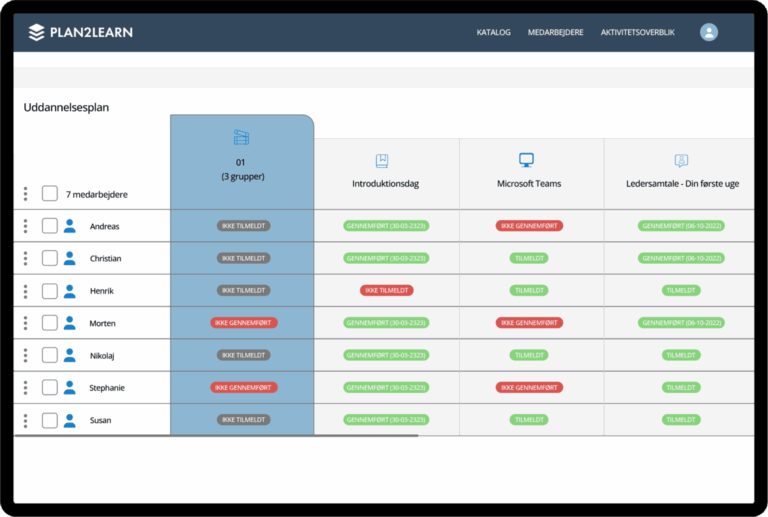
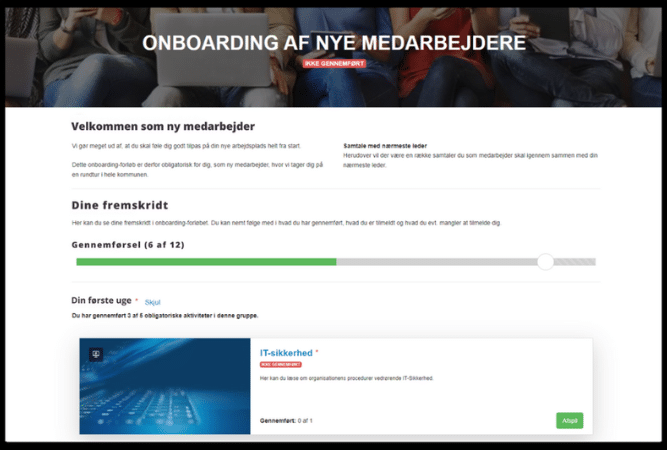
With plan2learn, you can gather the entire onboarding process in one place – whether it consists of documents, e-learning courses, Videos, physical onboarding days or webinars. This gives both you and the new employee a clear overview of all aspects of the onboarding process, and makes it easy to ensure a consistent and professional start.
You also have the option to:
- Tailor onboarding programme for different target groups, e.g. based on department, role, or location
- Set up automatic reminders so nothing is forgotten – neither by employees nor managers
- Give managers access to real-time status on how far the employee is in their programme
- Pull reports and use data to continuously evaluate and improve your onboarding process
The result is an onboarding process that saves time and ensures a better experience for the new employee – without compromising on content or quality.
Would you like to see how it works in practice?