What is an LMS?
LMS is an abbreviation for Learning Management System, It is a comprehensive platform for managing all your learning activities. With an LMS, you can bring your organization's range of e-learning, course offerings, and learning activities together in one unified system.
It is a tool that makes the entire process of creating, delivering, and delivering learning much simpler. You will also benefit from a significantly greater overview, as everything takes place in the same place.
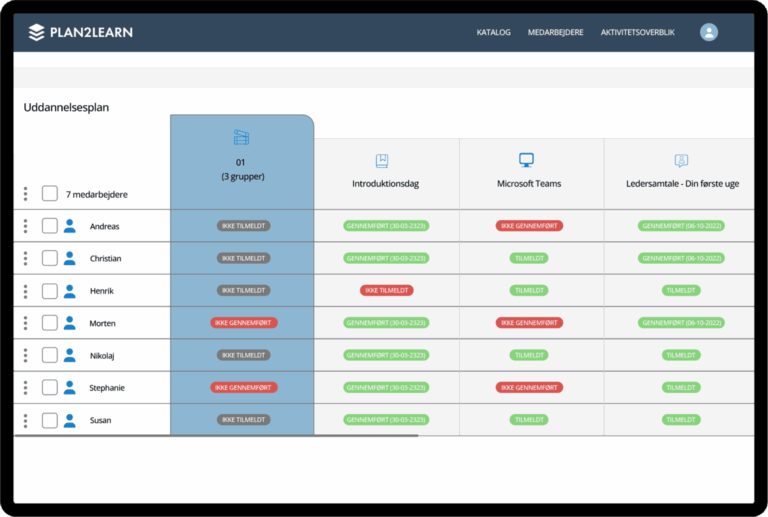
An LMS consists of an administration part and a user interface. The administration part can be considered the actual control room, where the the organisation manages their learning activities. This is where the e-learning material is organized and offered via course modules.
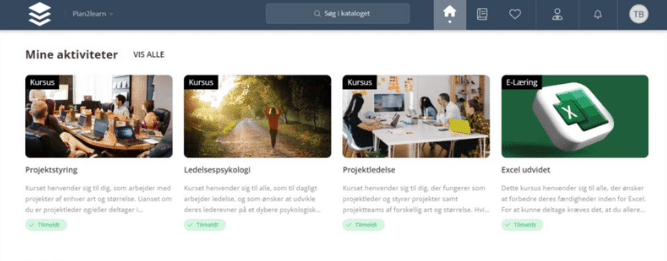
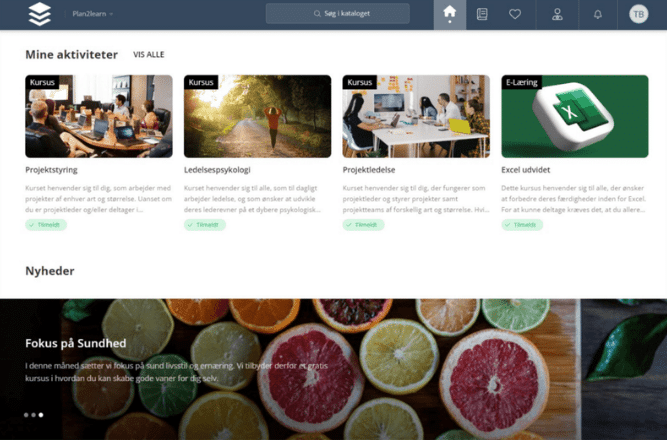
The user interface is the outward-facing part of the system that users will be presented with when they start a learning programme course. Here they can search for a specific course and keep track of their learning progress.
What are the benefits of an LMS?
E-learning is in itself an essential tool, and in principle it could stand alone, such as a PowerPoint presentation or a standalone quiz that you put on your intranet. However, in our opinion, that would not be the best way to harness the potential of your learning offering.
When e-learning is combined with a learning management system, a wealth of new opportunities opens up, for both you and your employees.
A comprehensive platform for learning
You get a single entry point for all your learning activities, whether it’s courses, e-learning, or physical events. You create all your courses and learning paths in the system, and can easily manage the small details without the use of other tools. Manage, customize, and publish your learning all from the same platform.
Say goodbye to manual, administrative work
When you use an LMS to manage your learning, you will streamline many of the tasks you handle manually today. Use tools like target groups, which bring together employees with similar learning needs, and templates that allow you to reuse courses to cut down on your work hours.
Competency management and follow-up
With an LMS, you have a complete overview of your employees and their training courses. You can plan courses and connect the target groups you find most relevant to the teaching. If your company lacks the necessary competencies, you can quickly see where in the the organisation a training course should be implemented.
Learning that is easy to find
With a course catalogue, your employees can find and sign up for relevant courses themselves. It’s simple, clear, and motivating – and you decide how it should look.
Engaging learning flow
An LMS allows you to be more creative with your learning offerings. Create programme that incorporate elements of blended learning and microlearning. Combine in-person instruction with e-learning, and keep your employees engaged throughout the learning process.
Accessibility for employees
With an LMS, your employees can access their learning when it fits into their schedule. Since the learning takes place online, it will always be available, regardless of time or location. You just need to bring your tablet or smartphone along, and you’re ready to go.
Wait, but what about SCORM?
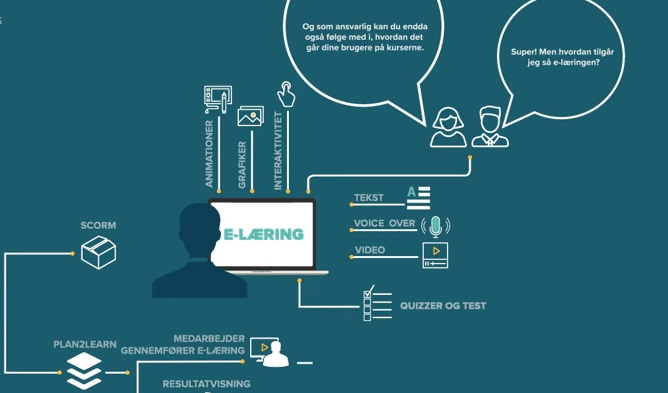
There are a number of LMS platforms on the market that use SCORM packages. SCORM is a type of packaging for your e-learning material that allows it to be played through your LMS.
To quote our colleagues at Prolearning, So, you can imagine a SCORM package as a ”Video tapes that are not particularly motion-sensitive in themselves. By using an LMS platform that has an SCORM engine built in, you get exactly what you need: an player.”.
Once you have created your e-learning material, whether it is a quiz, video or images, it must be packaged into a single SCORM package. SCORM is a necessary set of rules for the LMS platform to function properly and for you to get the full benefit from it.
How to choose the right LMS:
There are many LMS platforms out there, so it’s about finding the one that best suits you. Start by figuring out what you need: For example, should the system support SCORM, competency management or be accessible from the mobile phone?
Also consider the economics – some systems have a fixed price, while others charge per user. There may also be additional costs for support and customization, so it’s good to have an overview from the start.
It is important that the system can do what you need – both now and in the long term. This includes features such as course creation, reporting, and integration with your other systems. It is also a clear advantage if the platform supports multiple learning formats such as quizzes and videos – and maybe even let you build your own e-learning directly in the system.
The user experience must be top-notch – both for those who need to manage the system and those who need to learn how to use it. And remember to check that there is good support, proper data security, and the ability to customize the design to match your visual identity.
Plan2learn as an LMS
Plan2learn is a flexible learning management system that brings together e-learning, course administration and competency management in one platform. You get a complete overview of learning activities, and can easily create courses, plan and track progress. onboarding and work purposefully with employee competencies – all in one unified system.
The platform is user-friendly for both administrators and employees, and you can customize the design and logo so that your learning feels like a natural part of the organization’s universe. With features like target groups, SCORM support, course catalog, and automation, it’s easy to customize and scale learning across teams and departments.
Plan2learn is already used by over one million users, and we help you get started with personalized support and advice along the way.